The Bridal Theology of Anthony Trollope: Kind of a Stretch, but…

“Duke,” he said, “I’m afraid I have kept you waiting.” And the two political allies shook each other by the hand.

The Duke was in a glow of delight. There had been no waiting. He was only too glad to find his friend at home. He had been prepared to wait, even if Mr. Palliser had been out. “And I suppose you guess why I’m come?” said the Duke.

“I would rather be told than have to guess,” said Mr. Palliser, smiling for a moment. But the smile quickly passed off his face as he remembered his pledge to his wife.

“He has resigned at last. What was said in the Lords last night made it necessary that he should do so, or that Lord Brock should declare himself able to support him through thick and thin. Of course, I can tell you everything now. He must have gone, or I must have done so. You know that I don’t like him in the Cabinet. I admire his character and his genius, but I think him the most dangerous man in England as a statesman. He has high principles,—the very highest; but they are so high as to be out of sight to ordinary eyes. They are too exalted to be of any use for everyday purposes. He is honest as the sun, I’m sure; but it’s just like the sun’s honesty,—of a kind which we men below can’t quite understand or appreciate. He has no instinct in politics, but reaches his conclusions by philosophical deduction. Now, in politics, I would a deal sooner trust to instinct than to calculation. I think he may probably know how England ought to be governed three centuries hence better than any man living, but of the proper way to govern it now, I think he knows less. Brock half likes him and half fears him. He likes the support of his eloquence, and he likes the power of the man; but he fears his restless activity, and thoroughly dislikes his philosophy. At any rate, he has left us, and I am here to ask you to take his place.”

The Duke, as he concluded his speech, was quite contented, and almost jovial. He was thoroughly satisfied with the new political arrangement which he was proposing. He regarded Mr. Palliser as a steady, practical man of business, luckily young, and therefore with a deal of work in him, belonging to the race from which English ministers ought, in his opinion, to be taken, and as being, in some respects, his own pupil. He had been the first to declare aloud that Plantagenet Palliser was the coming Chancellor of the Exchequer; and it had been long known, though no such declaration had been made aloud, that the Duke did not sit comfortably in the same Cabinet with the gentleman who had now resigned. Everything had now gone as the Duke wished; and he was prepared to celebrate some little ovation with his young friend before he left the house in Park Lane.

“And who goes out with him?” asked Mr. Palliser, putting off the evil moment of his own decision; but before the Duke could answer him, he had reminded himself that under his present circumstances he had no right to ask such a question. His own decision could not rest upon that point. “But it does not matter,” he said; “I am afraid I must decline the offer you bring me.”

“Decline it!” said the Duke, who could not have been more surprised had his friend talked of declining heaven.

“I fear I must.” The Duke had now risen from his chair, and was standing, with both his hands upon the table. All his contentment, all his joviality, had vanished. His fine round face had become almost ludicrously long; his eyes and mouth were struggling to convey reproach, and the reproach was almost drowned in vexation. Ever since Parliament had met he had been whispering Mr. Palliser’s name into the Prime Minister’s ear, and now—. But he could not, and would not, believe it. “Nonsense, Palliser,” he said. “You must have got some false notion into your head. There can be no possible reason why you should not join us. Finespun himself will support us, at any rate for a time.” Mr. Finespun was the gentleman whose retirement from the ministry the Duke of St. Bungay had now announced.

“It is nothing of that kind,” said Mr. Palliser, who perhaps felt himself quite equal to the duties proposed to him, even though Mr. Finespun should not support him. “It is nothing of that kind;—it is no fear of that sort that hinders me.”

“Then, for mercy’s sake, what is it? My dear Palliser, I looked upon you as being as sure in this matter as myself; and I had a right to do so. You certainly intended to join us a month ago, if the opportunity offered. You certainly did.”

“It is true, Duke. I must ask you to listen to me now, and I must tell you what I would not willingly tell to any man.” As Mr. Palliser said this a look of agony came over his face. There are men who can talk easily of all their most inmost matters, but he was not such a man. It went sorely against the grain with him to speak of the sorrow of his home, even to such a friend as the Duke; but it was essentially necessary to him that he should justify himself.

“Upon my word,” said the Duke, “I can’t understand that there should be any reason strong enough to make you throw your party over.”

“I have promised to take my wife abroad.”

“Is that it?” said the Duke, looking at him with surprise, but at the same time with something of returning joviality in his face. “Nobody thinks of going abroad at this time of the year. Of course, you can get away for a time when Parliament breaks up.”

“But I have promised to go at once.”

“Then, considering your position, you have made a promise which it behoves you to break. I am sure Lady Glencora will see it in that light.”

“You do not quite understand me, and I am afraid I must trouble you to listen to matters which, under other circumstances, it would be impertinent in me to obtrude upon you.” A certain stiffness of demeanour, and measured propriety of voice, much at variance with his former manner, came upon him as he said this.

“Of course, Palliser, I don’t want to interfere for a moment.”

“If you will allow me, Duke. My wife has told me that, this morning, which makes me feel that absence from England is requisite for her present comfort. I was with her when you came, and had just promised her that she should go.”

“But, Palliser, think of it. If this were a small matter, I would not press you; but a man in your position has public duties. He owes his services to his country. He has no right to go back, if it be possible that he should so do.”

“When a man has given his word, it cannot be right that he should go back from that.”

“Of course not. But a man may be absolved from a promise. Lady Glencora—”

“My wife would, of course, absolve me. It is not that. Her happiness demands it, and it is partly my fault that it is so. I cannot explain to you more fully why it is that I must give up the great object for which I have striven with all my strength.”

“Oh, no!” said the Duke. “If you are sure that it is imperative—”

“It is imperative.”

“I could give you twenty-four hours, you know.” Mr. Palliser did not answer at once, and the Duke thought that he saw some sign of hesitation. “I suppose it would not be possible that I should speak to Lady Glencora?”

“It could be of no avail, Duke. She would only declare, at the first word, that she would remain in London; but it would not be the less my duty on that account to take her abroad.”

“Well; I can’t say. Of course, I can’t say. Such an opportunity may not come twice in a man’s life. And at your age too! You are throwing away from you the finest political position that the world can offer to the ambition of any man. No one at your time of life has had such a chance within my memory. That a man under thirty should be thought fit to be Chancellor of the Exchequer, and should refuse it,—because he wants to take his wife abroad! Palliser, if she were dying, you should remain under such an emergency as this. She might go, but you should remain.”

Mr. Palliser remained silent for a moment or two in his chair; he then rose and walked towards the window, as he spoke. “There are things worse than death,” he said, when his back was turned. His voice was very low, and there was a tear in his eye as he spoke them; the words were indeed whispered, but the Duke heard them, and felt that he could not press him any more on the subject of his wife.

I knew there was a reason why I always loved their relationship– despite Plantagenet’s decimal coinage campaign, which ought to have been enough to put me off.  Think about it: he loves her even while she’s in love with someone else– someone completely unworthy– and even though she is silly and snide.  Even though she doesn’t love him.  He passes up the chance at political power in order to save her from her own disordered passion, at great cost to himself.  And finally, he’s triumphant: she does come to love him, and he does become Chancellor of the Exchequer.

It’s the Gospel, more or less.  With stopovers in political economy and Gothic romance.  Now I am even more happy about my candidate: my car (well, my mom’s car, at this point, technically) has a bumper sticker on it that says Plantagenet Palliser for President.

I have a crush on a livery company. Is that weird?

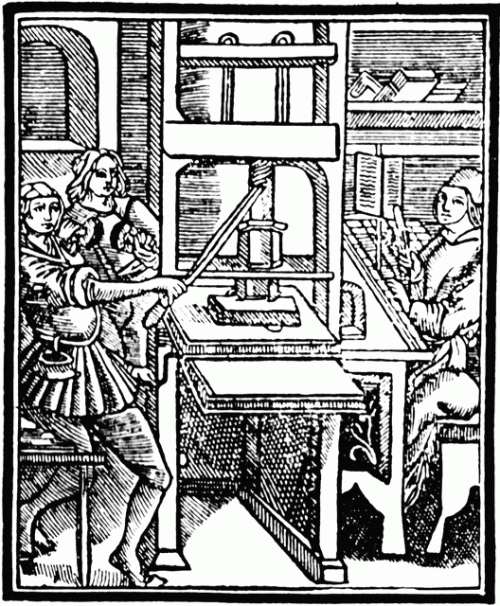
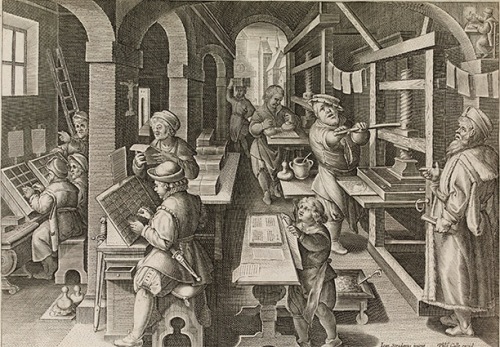
It’s the Stationers’ Company of London. Actually now the Stationers’ and Newspapermakers’ Company.  Used to be in charge of all printing and publishing; went around smashing up unauthorized presses (well, that’s not an attractive habit, I admit); and has generally promoted the good of publishers and their widows and orphans since 1403.

Tim Connell, a liveryman of the company (and chairman of the Gresham Society– the lecture is one of the Gresham College free lectures that have been going on since Sir Thomas Gresham started the whole thing off in 1597) gives a wonderful lecture here on the history of London livery companies.

It’s the 1666 Great Fire that does it for me.  According to Connell, the clerk of the company showed up with a wheelbarrow or something just as the fire was approaching the guildhall.  He had to choose whether to save the company records– which, as this was before the Statute of Anne, included all the copyright records for the country, basically– or the company silver.  He chose the records.

I’ve heard two different things about where the records went from there.  Either the clerk took them home with him to his suburban house where they escaped the fire, or he put them in St. Paul’s– Old St. Paul’s– which of course got burnt up.  That second story is in my head as an anecdote, but I don’t know where I got it from, so maybe it’s wrong.

Playing the Game– With Gratitude to Msgr. Ronald Knox

And Holmes himself?  What were his politics?  Well, an imperialist, with his VR monogram blasted into the sitting-room wall, and his uncritical sympathy with Mycroft’s projects.  A rationalist, of course; his approach to domestic law enforcement and Mycroft’s to international politics rhymed.  He saw scientifically-grounded “criminal tendencies” in handwriting, in the shape of a head; he was much more comfortable asking questions of cigar ash than of humans; with a parallel social-scientific approach, Mycroft advanced Her Majesty’s empire through what he referred to, archly, as “accounting.”  I find no specific reference, but I assume that Holmes supported the Boer War.
His shelves carried Francis Galton’s monographs on fingerprint analysis, and Galton, a eugenicist and fervent proponent of a scientific criminology based on the work of his cousin Charles Darwin, certainly influenced some of Holmes’ approaches. If he had been prone (which he was not) to social activism of any kind, he would certainly have given a favorable ear to the eugenicists.   In many ways, he was quite close to today’s neocons.  Though he subscribed to the Illustrated London News, I have no doubt that he flipped impatiently past Chesterton’s articles on his way to the agony notices at the end.

But the classicism, the Enlightenment rationalism, implied by his methods, were belied by his life: the cocaine, his seeking out of the company of criminals even as he held himself apart from them, his fear of women and his refusal to admit the nature of his feelings for Irene Adler, the isolation that culminated in his bizarre decision after Reichenbach Falls to cut himself off even from Watson… He was both Jeckyll and Hyde at the same time, both the Enlightenment and its Gothic reaction.  And he knew this.  The time he spent in Tibet “studying with a lama” after Moriarty’s death points to a haunting sense of lack.

That he came back and embraced again the empiricism of his youth shows that the irrationalism and rejection of material reality in Buddhism could not satisfy.  One can only hope that, at some point (in his Sussex beekeeping days– surely a pursuit that shows certain Chestertonian tendencies?) he did begin to attend to one of the controversies going on in the London papers that he devoured like they were his daily bread.  Chesterton’s philosophy would– if Holmes could have been convinced to give it a chance– have satisfied his Aristotelian soul.  Holmes’ love of induction, his commitment to the moderate realism that his method entailed, his delight in the concrete details of material reality, would have found a home in Chesterton’s Thomism.  And he would have found other things there, as well.

Brigadier Gerard and Political Induction in Fiction

Among my Christmas presents was a complete collection of Conan Doyle’s Brigadier Gerard stories (with one extra Napoleonic story as an appetizer), and I started it recently while sitting in at 71 Irving Place, a coffeehouse right across the street from Pete’s, O. Henry’s tavern, just off Union Square.The book is delicious on all counts, not least because Conan Doyle’s “types” are so socially and politically alien to any “types” in modern fiction: Early-to-mid 19th century French military men filtered through the sensibility of a Victorian English popular fiction writer.  We can recognize liberals and conservatives, even bourgeois bohemians and Tories, in (for example) the Isabel Dalhousie or 44 Scotland Street novels of Alexander McCall Smith.  We can peg them pretty easily: they are the Edinburgh versions of people we might meet in Zabars.  But what can we make of Lacour?
“There are many folk who knew Alphonse Lacour in his old age.  From about the time of the Revolution of ’48 until he died in the second year of the Crimean War he was always to be found in the same corner of the Cafe de Provence, at the end of the Rue St. Honore, coming down about nine in the evening, and going when he could find no-one to talk with.  It took some self-restraint to listen to the old diplomatist, for his stories were beyond all belief…

“‘You must know, monsieur,’ he would say, ‘that I left Egypt after Kleber’s assassination.  I would gladly have stayed on, for I was engaged in a translation of the Koran, and between ourselves I had thoughts at the time of embracing Mahometanism, for I was deeply struck by the wisdom of their thoughts about marriage.  They had made an incredible mistake, however, upon the subject of wine, and this was what the Mufti who attempted to convert me could never get over.’”

What’d he be called?  Reactionary liberal?  Bonapartist conservative? This– I’m serious– this is one thing that non-contemporary fiction can do, if you read it with at least one ear cocked for the politics and philosophy.  Even in something as recent as Conan Doyle, we are on such foreign territory that our normal methods of induction fail us.  We can’t look at these people, at the pattern of calluses on their hands and the type of mud on their boots, at the opinions they let slip and the assumptions they betray, and place them in our normal political spectrum.

Thumbs up for the Brigadier Gerard stories, thus far.  Don’t be put off by the fact that Phillip Pullman gave them a good blurb.  That strike against them is balanced out by the fact that Churchill did, as well.

Social Media in the Restoration

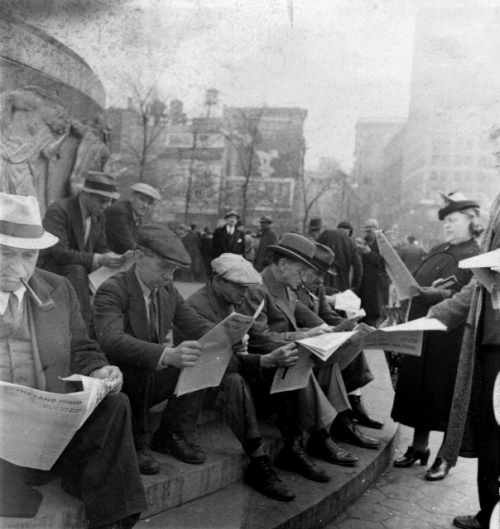
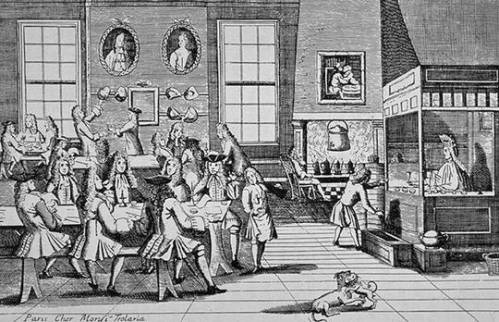
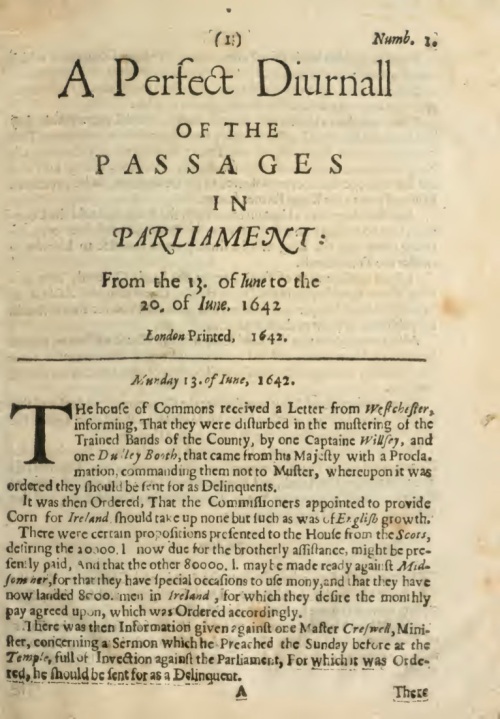
That may be overstating the case somewhat.  But at the end of the 17th century, John Houghton, an apothecary, coffee and chocolate seller, and miscellaneous harebrained schemer, started a periodical publication meant to be a sort of communal encyclopedia of practical knowledge.  Each number of the publication contained listings for prices of farm products from more than 30 different market towns– presumably so that farmers who subscribed would know where to send their goods for the best price– as well as snippets of information from other papers, things like stock prices, and an extensive classified section.  What made this different from other newspapers was his distinct lack of news.  Where other papers would have, in the front section, reportage on news of the day, he had encyclopedia-like articles on practical subjects: types of clay, uses of hazel wood, the making of soap.  He solicited articles not just from idle Fellows of the Royal Society ( who might be hanging around his shop near the Ship Tavern in Bartholomew Lane, right up next to the Royal Exchange), but from his own subscribers who just happened to have the specialized knowledge he was looking for.  Presumably each issue would contain a kind of call-for-papers for the topics to be covered in the next issue–directed not at scholars, but at anyone who happened to read the thing.

As well as this proto-Wikipedia service, he ran a marriage brokerage: a proto-eharmony; a matching-up-buyers-with-sellers business that shaded over into advertising; and other similar information brokerage services; he was also  passionately pro-trade and seems to have argued in a completely non-mercantilist way that Britons buying luxuries from foreign countries was just fine, even though that meant that gold and silver were going out of the country.  Check out The Information Business, the fascinating lecture by Michael Harris about Houghton’s venture into the exhausting business of being a one-man Google in 1690s London.  Also appearing: John Dunton, bookseller and publisher of an ask.com-like question-and-answer periodical and Samuel Hartleb, a Polish immigrant who lived right near Pepys. Hartleb was a generation older and his information-broking was manuscript, not print-based: he wrote and received an absolutely phenomenal volume of letters from a huge number of people.  He also ran a labor exchange (this was 1646, just after the Civil War) to address the unemployment crisis of the time; he had a religious motivation for this, believing that to spread knowledge as he was trying to do would hasten the coming of the Kingdom of God.

Well worth a listen.

Pic is Hogarth, Hudibras beats Sidrophel.  The beating is taking place in an apothecary shop.

Brooks on Santorum

Brooks’ op-ed from Friday is so thoroughly an illustration of the quasi-sympathy that my quasi-liberal friends have with the kind of quasi-conservatism that I believe in that it…well, it got to me.

Brooks is commenting on Sanorum’s communitarianism, and thinks he gets something about its implications that Santorum himself doesn’t quite understand.  ”He is,” writes Brooks, “far closer to developing a new 21st-century philosophy of government than most leaders out there…[He] understands that a nation isn’t just an agglomeration of individuals; it’s a fabric of social relationships…He presents an extended argument against radical individualism.”  Brooks quotes approvingly from Santorum: “Just as original sin is man’s inclination to try to walk alone without God, individualism is man’s inclination to try to walk alone among his fellows.”

Brooks has done his homework: “His political philosophy,” he writes, “is built around the Catholic concept of subsidiarity– [the idea] that everything should be done at the lowest [i.e. localest] level possible. That produces a limited role for Washington, but still an important one.” This comforts Brooks, rightly: there’s a non-ideological localism in subsidiarity, a localism that doesn’t utterly reject the national government (or the nation-state), that is less rigid than the localism of the anarcho-libertarian right.

Brooks notes that Santorum “seems to understand that simply cutting is not enough to build a healthy society…Santorum understands that we need to fuse economics talk and values talk.”  But Santorum, claims Brooks, doesn’t really understand the implications of his own thinking: “he hasn’t appreciated that the biggest challenge to stable families, healthy communities, and the other seedbeds of virtue is not coastal elites.  It’s technological change; it’s globalization; it’s personal mobility and expanded opportunity; it’s an information-age economy built on self-transformation and perpetual rebranding instead of fixed inner character.”  Santorum, claims Brooks, doesn’t realize that he should be more radical than he is; he “doesn’t yet see that once you start thinking about how to foster an economic system that would nurture our virtues, you wind up with an agenda far more drastic and transformational.”  Brooks seems to call for public works programs as a means of job-creation: “If you believe in the dignity of labor, it makes sense to support an infrastructure program that allows more people to practice the habits of industry… If you want capitalists thinking of the long term… you have to encourage companies to be more deeply rooted in local communities rather than just free-floating instruments of capital markets.”  Most astonishingly, he writes that “If you believe in the centrality of family, you have to have a government that both encourages marriage and also supplies wage subsidies to men to make them marriageable. ”  Glory hallelujah, somebody buy Allan Carlson a drink, because David Brooks raised in the pages of the New York Times the concept of the family wage for men.

Whether or not Brooks is right that Santorum doesn’t understand the implications of his ideas, the tragedy at the heart of this editorial is the fact  that Brooks doesn’t understand the implications of his own.  Because before launching on his moderately pro-Santorum, really quite consistent communitarian commentary, Brooks notes that he is “to Rick Santorum’s left on most social issues.”  Like, he explains, abortion.  And there, in the first sentence, he surrenders his right to criticize Santorum for inconsistency.  How can Brooks– how can all my quasi-liberal friends– be so clear-sighted about the insanity of sacrificing communities on the altar of economic liberty, and so blind to the corollary truth about abortion?  If it’s appropriate for government to step in to curtail what right-libertartians would call freedom of contract, when that freedom of contract would operate against the integrity of society, how much clearer is it that it’s appropriate for government to prevent what left-libertarians call freedom of choice, when that freedom operates against the integrity of the very bodies of children?  I read Brooks, and I agree, and I agree, and I disagree a bit but I see what he’s saying, and I agree, and then– it’s like hitting a wall.  I remember believing the way he believes about abortion.  But I don’t remember how.   

The Strange History of the Plymouth Council for New England: a Thanksgiving Tale in Favor of Distributed Property

Now, I have nothing against the Mayflower Compact.  And I’m a Protestant, which means that I don’t have the complexity of relationship with the Pilgrims that others do (even though they would consider me insufficiently Reformed because I am not a Calvinist.) And I couldn’t resist the picture.

But on this Thanksgiving eve (with my yams roasting in the oven so that tomorrow I’ll just be able to heat them up and pour flaming Jack Daniels over them at the family dinner in New Paltz, New York), I want to draw your attention to another document.  As founding documents go, it’s not even a B-list celebrity (the Mayflower Compact is a bit of a B-lister, actually; the Emily Blunt to the Declaration of Independence’s Emma Thompson; not less likeable, or talented, necessarily, but less well known) .  No, this document is more of a road not taken: a piece of our heritage that landed on the cutting room floor.

It is the 1635 Act of Surrender of the Great Charter of New England to His Majesty, said majesty in question being Charles I of England.  What had happened was this: fifteen years before, in 1620, King James I/VI had given a charter to a group of forty men: the right to form a joint-stock company for the purpose of planting colonies in what he called the “Maine lands,” or what we would call New England. The charter reads, in part,

There shall be for ever hereafter, in our Towne of Plymouth, in the County of Devon, one Body politicque and corporate, which shall have perpetuall Succession, which shall consist of the Number of fourtie Persons, and no more, which shall be, and shall be called and knowne by the Name the Councill established at Plymouth, in the County of Devon for the planting, ruling, ordering, and governing of New-England, in America.

It gave these forty men enormous rights over the area they were going to settle and the people who were going to settle there: they had the right to make and enforce such laws “as they in their good Discretions shall thinke to be fittest for the good of the Adventurers and Inhabitants there.”  The laws had to be in keeping with the rights (as Englishmen) of both the “adventurers,” that is, the investors and traders, and the “inhabitants,” the settlers.  But the company– a private and for-profit enterprise– was what was going to be making the laws.

They also had exclusive rights to trade and work with the natural resources of this place: they had possession

throughout the Maine Land from Sea to Sea, together also, with the Firme Lands, Soyles, Grounds Havens, Ports, Rivers, Waters, Fishings, Mines, and Mineralls, as well Royall Mines of Gold and Silver, as other Mine and Mineralls, precious Stones, Quarries,

and all kinds of other goodies.  And they were granted these things “in free and common Soccage and not in in Capite, nor by Knight’s Service;” that is, they owned these lands and goodies, they weren’t tenants, and didn’t have to serve in James’ army in exchange for the grant.

It was this 1620 charter that the Pilgrims were under when, in 1621, they celebrated the first Thanksgiving.  And then, 14 years later, the company that had been formed by the charter, that had all these rights to the land from which the Pilgrims were barely beginning to make a living– that company… dissolved itself.

“Now Know ye that,” wrote the Company men,

the said President and Council, for divers good causes and considerations them thereunto moving…by these presents do…yield up and surrender unto our most gracious Sovereign Lord Charles by the Grace of God, King of England, Scotland, France and Ireland, Defender of the Faith,

their rights over New England that they’d held under James’ Charter.  They surrendered those rights, and they ended their existence as a company.

Why?  Joseph Storey, in his Commentary on the Constitution of the United States, explains:

[T]he immediate cause of the surrender was the odious extent of the monopolies granted to them, which roused the attention of Parliament, and of the nation at large, and compelled them to resign, what they could scarcely maintain against the strong current of public opinion.

The surrender, so far from working any evil, rather infused new life into the colonies…

Storey is, I assume, right about the situation: this was not an act of pure benevolence, to promote property ownership and small business among New Englanders.  But they still had a choice, and they gave up their monopoly– even if it was in the face of public and parliamentary pressure; even if they really would have preferred to just keep the whole thing.  Those men, the ones who in 1635 gave up their commercial monopoly, and opened New England back up to smaller enterprise and public use, are American heroes.  I am thankful for them, and so I am, here, going to give them a memorial:  they were:

Thomas, Earl of Arundel

William, Earl of Hathe

Henry, Earl of Southampton

William, Earl of Salisbury

Robert, Earl of Warwick

John, Viscount Haddington

Edward, Lord Zouch, Lord Warden of the Cincque Ports

Edmond, Lord Sheffield

Edward, Lord Gorges

Sir Edward Seymour

Sir Robert Manselle

Sir Edward Zouch

Sir Dudley Diggs

Sir Thomas Roe

Sir Ferdinando Gorges

Sir Francis Popham

Sir John Brook

Sir Thomas Gates

Sir Richard Hawkins

Sir Richard Edgcombe

Sir Allen Apsley

Sir Warwick Hale

Sir Richard Catchmay

Sir John Bourchier

Sir Nathaniel Rich

Sir Edward Giles

Sir Giles Mompesson

Sir Thomas Wroth

Matthew Sutcliffe, Dean of Exeter

Robert Heath, Esq, Recorder of the City of London

Henry Bourchier, Esq.

John Drake, Esq.

Rawleigh Gilbert, Esq.

George Chudley, Esq.

Thomas Hamon, Esq.

John Argall, Esq.

the heir of Lodowick, Duke of Lenox

the heir of George, Marquess of Buckingham

the heir of James, Marquess of Hamilton

the heir of William, Earl of Pembroke

(The Surrender only refers to the deaths of the higher-ranking members; presumably some of the smaller folk had also died in the intervening fifteen years, and so it was their heirs, rather than they themselves, who made the decision.)

Happy Thanksgiving!